Mind maps for students
How students use mind maps for lecture notes, exam revision, essay plans and course reading, with free templates for each.
Who this is for
School, college and university students who sit lectures, read for courses, write essays and revise for exams. Most of that work means taking in a lot of material, finding how it fits together and recalling it later, often on a laptop in the library or an iPad between classes.
What a mind map does for students
Turn a lecture into a map
Catch each main point of a lecture as a branch while it is fresh, then fill in examples and details from the slides afterwards.
Revise by recalling, not rereading
Put the exam topic in the centre, add every branch you can remember with the book closed, then check what you missed.
Plan an essay before writing it
Lay out the question, the argument, the evidence for each point and the order of paragraphs, so the draft has a shape.
Summarise a book or a chapter
Give each part, theme or character a branch, and keep quotes and page numbers under them for the essay later.
Templates to start from
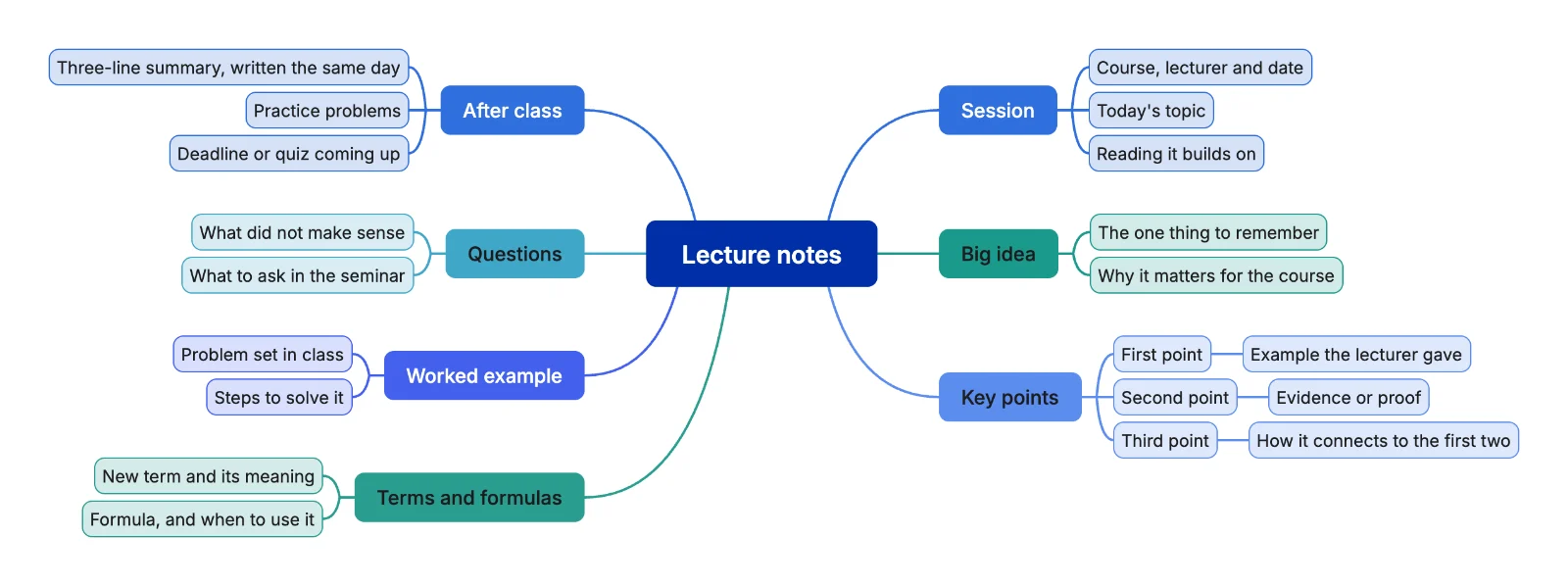 Lecture notes mind map template
A lecture notes mind map with the big idea, key points, terms, a worked example, questions and after-class tasks, built for taking notes in class.
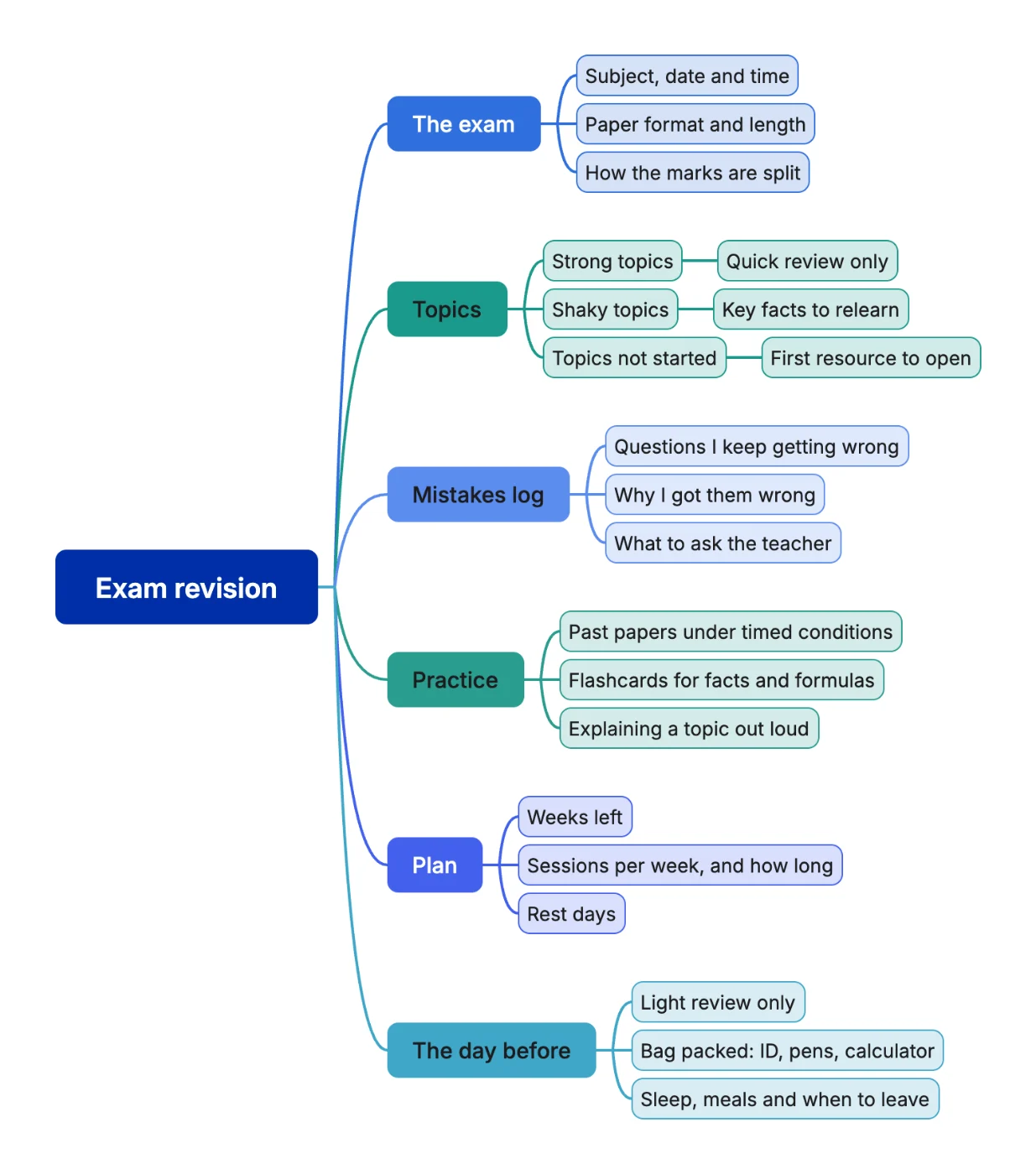 Exam revision mind map template
An exam revision mind map with topics sorted by confidence, a mistakes log, practice, a study plan and a checklist, so you know what to study each day.
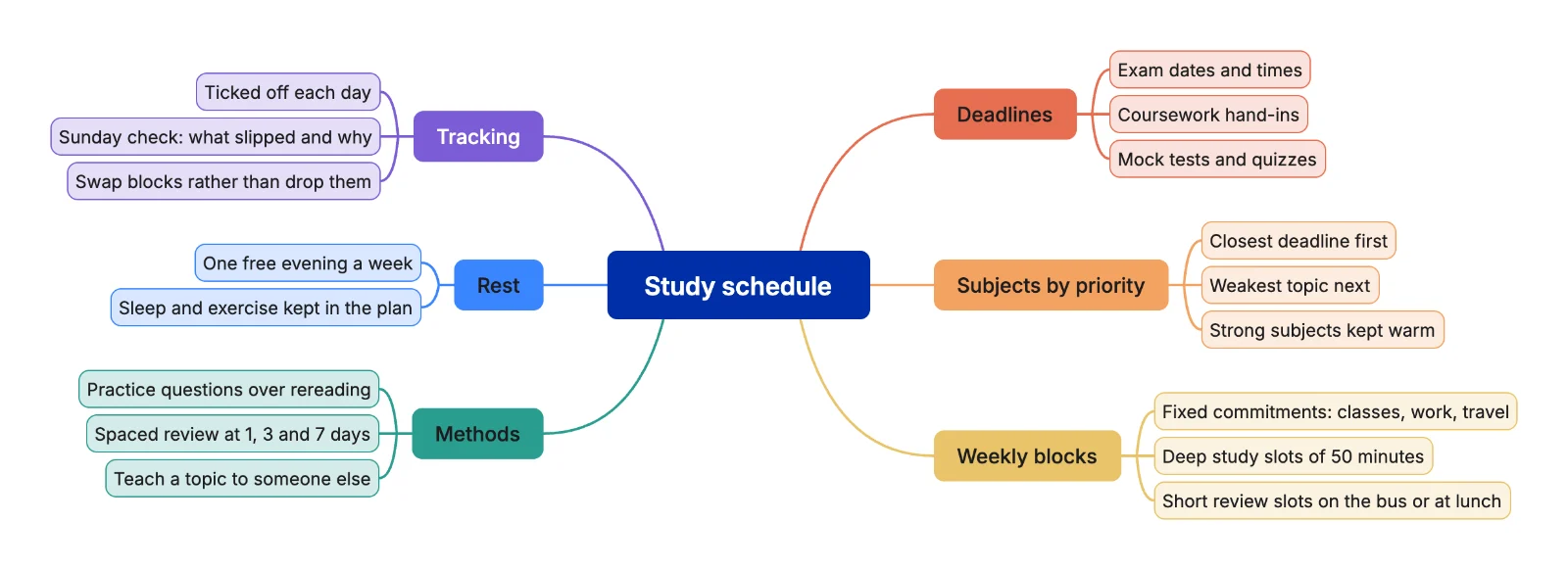 Study schedule mind map template
A study schedule mind map for a term or exam season: deadlines, weekly time blocks, subjects by priority, review sessions, rest and how to stay on track.
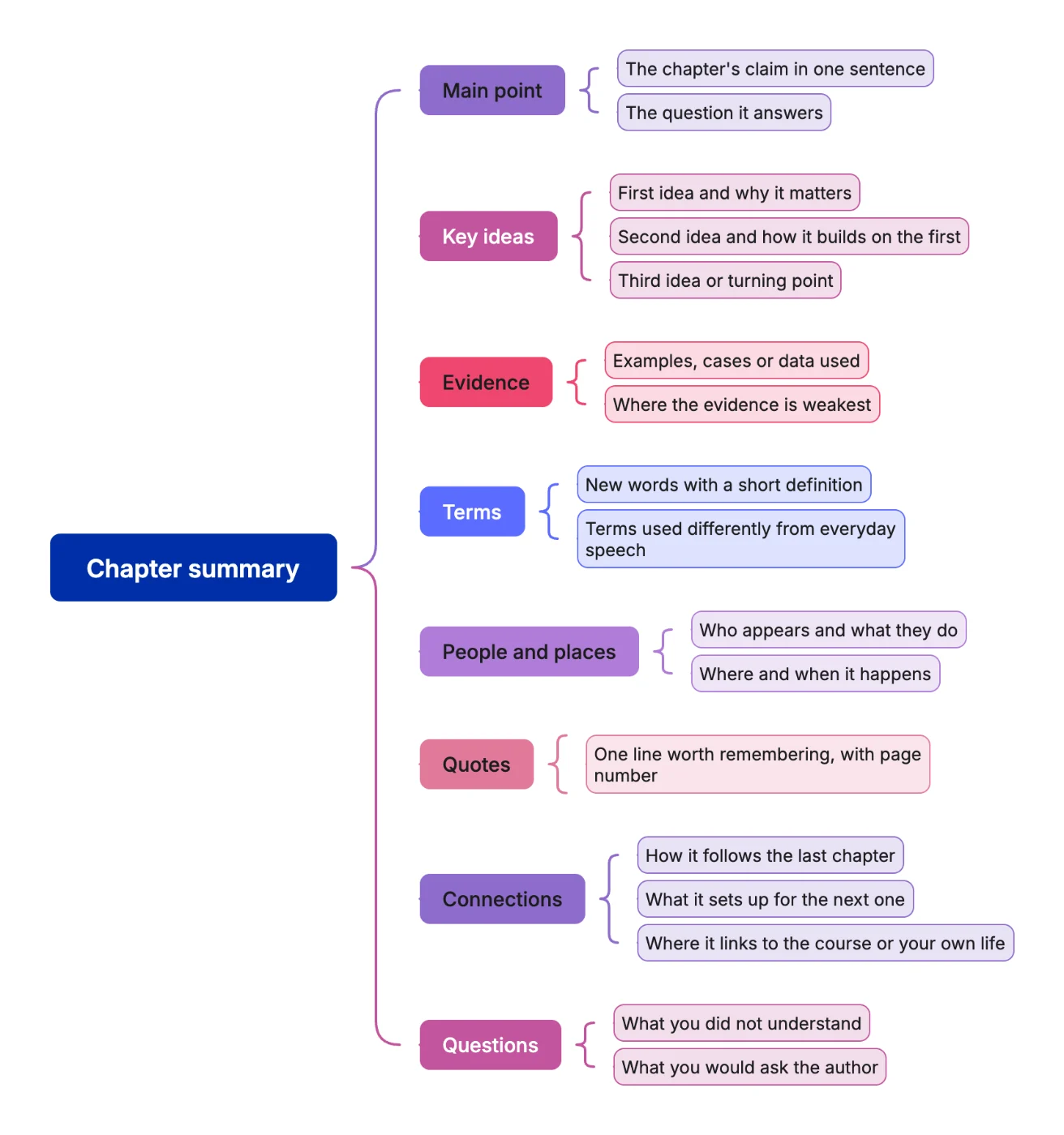 Chapter summary mind map template
A chapter summary mind map with the main point, key ideas, evidence, terms, people, quotes and links to other chapters, to recall one chapter at a glance.
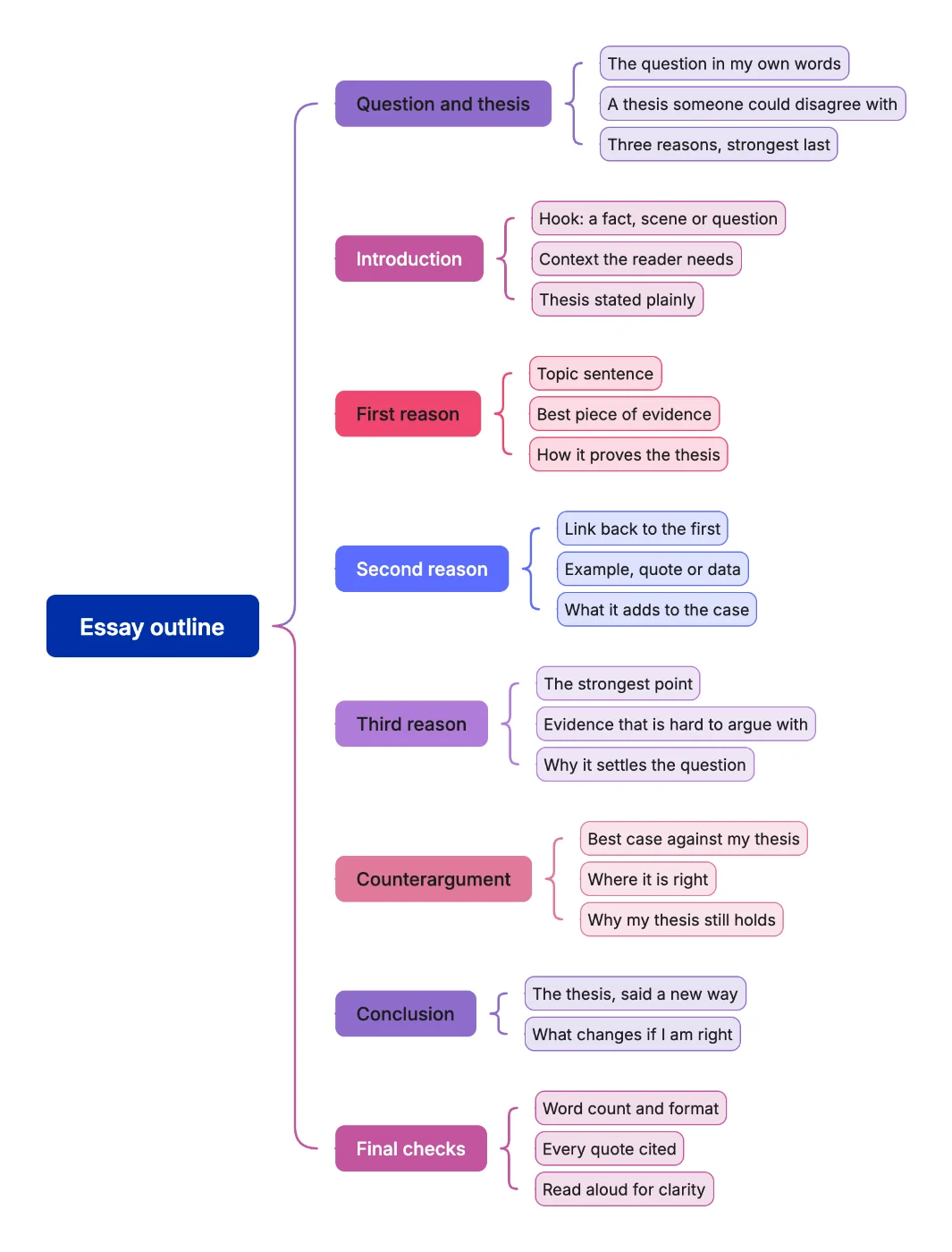 Essay outline mind map template
An essay outline mind map with thesis, introduction, three reasons, counterargument and conclusion, ready to fill in before you start writing.
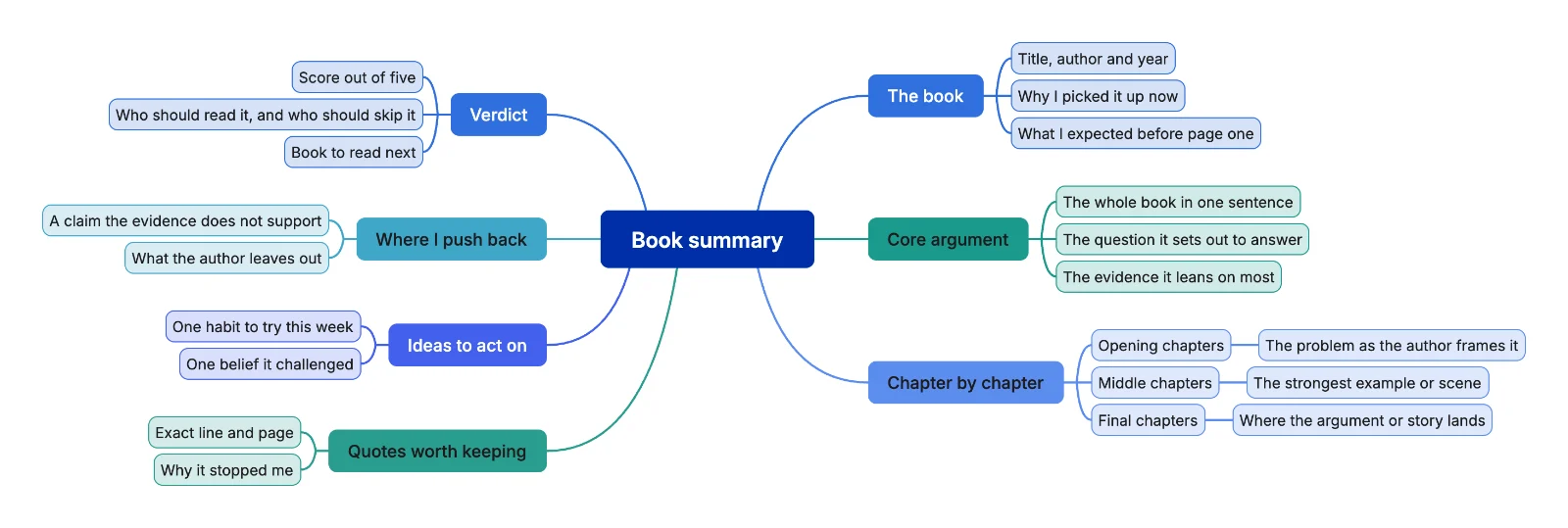 Book summary mind map template
A book summary mind map with the core argument, chapter notes, quotes, ideas to act on, your objections and a verdict, so you can recall a book in one page.
Why a map helps with studying
A course is a lot of material arriving in a straight line: one lecture, one chapter, one page after another. A map turns that line into a shape. The main ideas sit near the centre, the details group under them, and gaps show up as branches with nothing on them.
The useful part is building the map yourself, from memory where you can. Copying a chapter into branches feels productive but tests nothing. The guide to mind mapping for studying shows how to make each map a short self-test.
Where to start
Pick the template that matches the job in front of you and open it in the browser editor. Rename the central topic to your course or question, then work through one branch at a time. If your notes are already in Markdown, paste them into the Markdown to mind map tool and they become a map.
Free tools for students
- Mind map maker: Start a blank map and build it in your browser.
- Markdown to mind map: Paste Markdown and see it as a mind map.
- XMind viewer: Open a .xmind file without XMind, then edit or export it.
On iPhone and iPad
MindmapPal for iPhone and iPad keeps your course maps as files in your own iCloud Drive and works offline, so a map made in the library opens on the bus. On iPad you can write topics with Apple Pencil and Scribble, and any map switches to an outline.
Coming soon to the App Store