Mind maps for teachers
How teachers use mind maps to plan lessons, map a unit, make revision resources and sketch a scheme of work, with templates ready to adapt.
Who this is for
Classroom teachers, tutors and trainers who plan lessons, sequence units across a term, set revision and explain ideas to a room. The work is mostly deciding what goes in, in what order, and how it fits what came before.
What a mind map does for teachers
Plan a lesson on one page
Put the learning goal in the centre and give starter, input, practice and check for understanding a branch each, with timings under them.
Map a whole unit before you teach it
Lay out the unit's big ideas, the lessons that carry them and the assessments, so gaps and repeats show before week one.
Hand students a revision map
Build a topic map with some branches left blank and let students fill them in, or export it as an outline to print.
Show how topics connect in class
Build a map on screen as students call out ideas, so the board ends the lesson with a record of what the class said.
Templates to start from
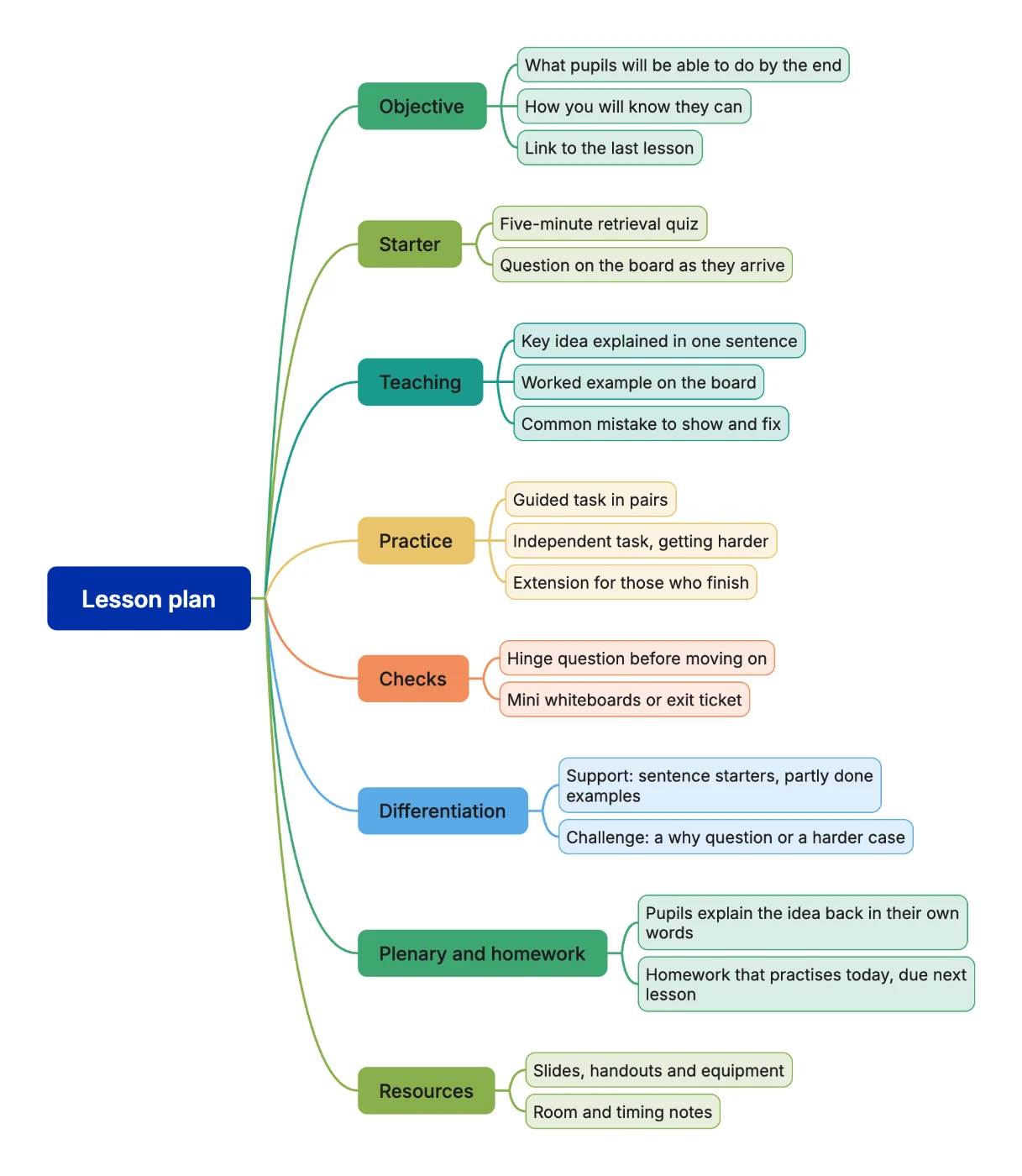 Lesson plan mind map template
A lesson plan mind map that runs from the learning objective through starter, teaching, practice and plenary to homework, checks and differentiation.
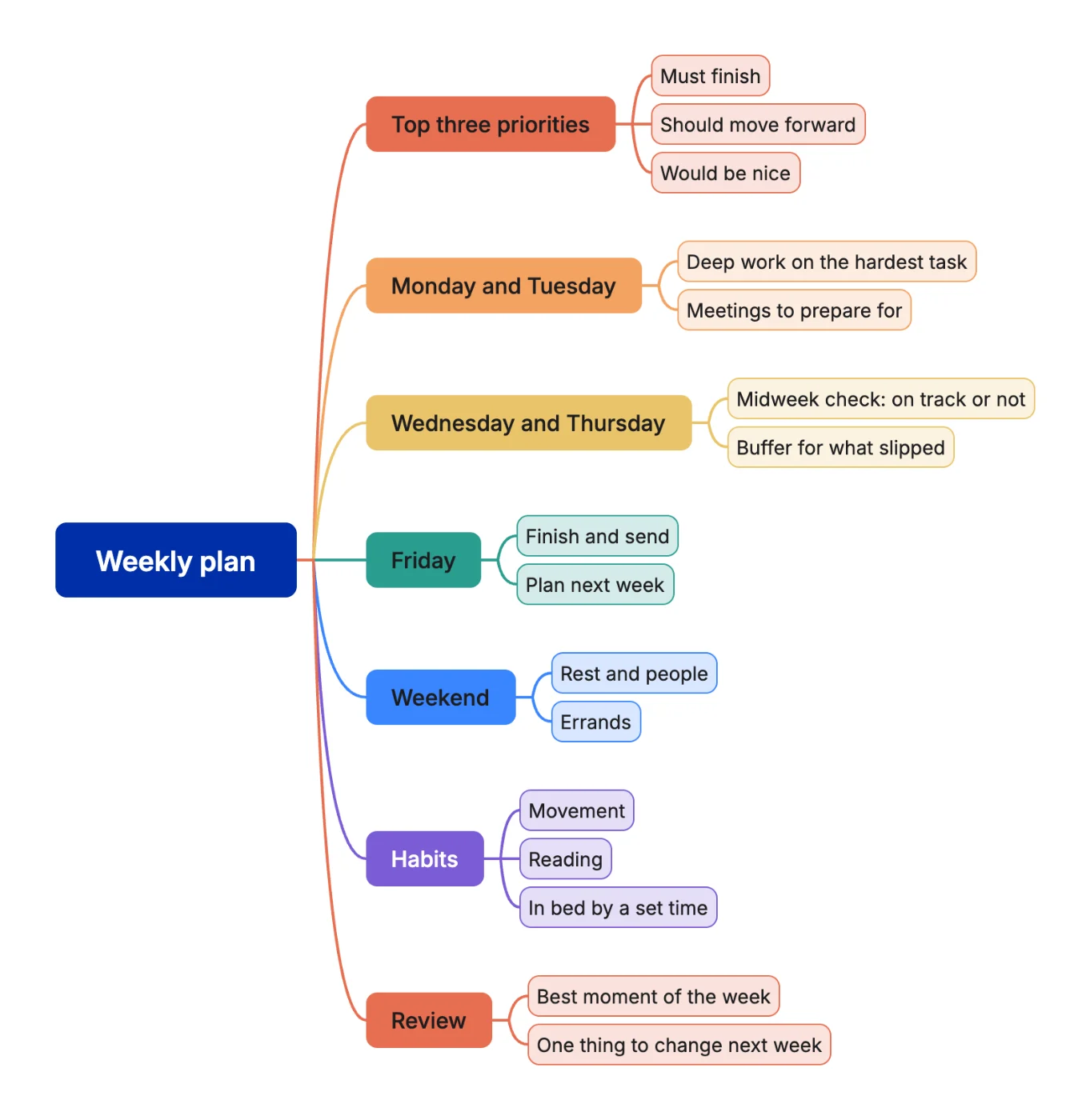 Weekly plan mind map template
A weekly plan mind map with priorities, day by day tasks, meetings, habits and a Friday review, for planning your week in ten minutes.
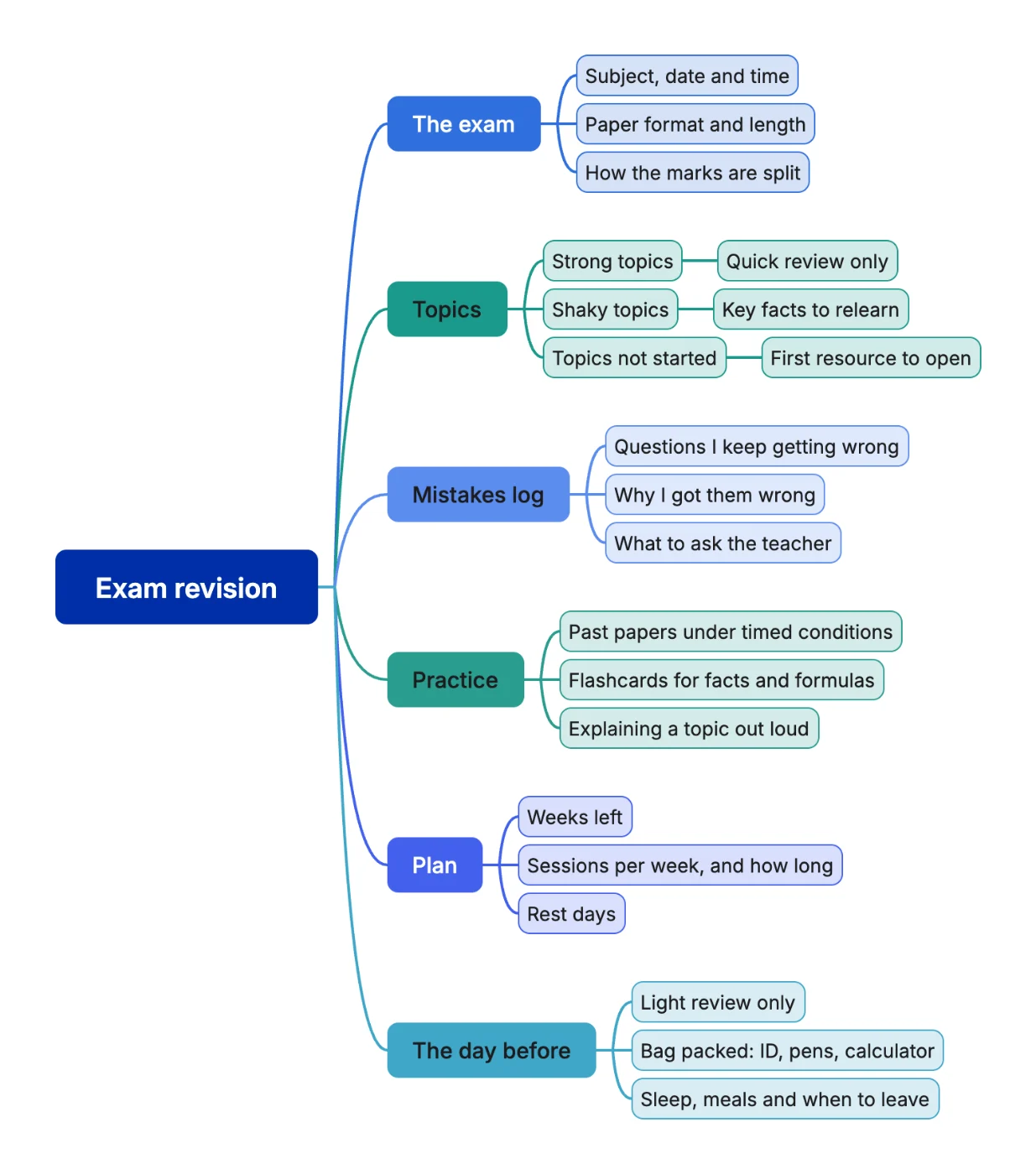 Exam revision mind map template
An exam revision mind map with topics sorted by confidence, a mistakes log, practice, a study plan and a checklist, so you know what to study each day.
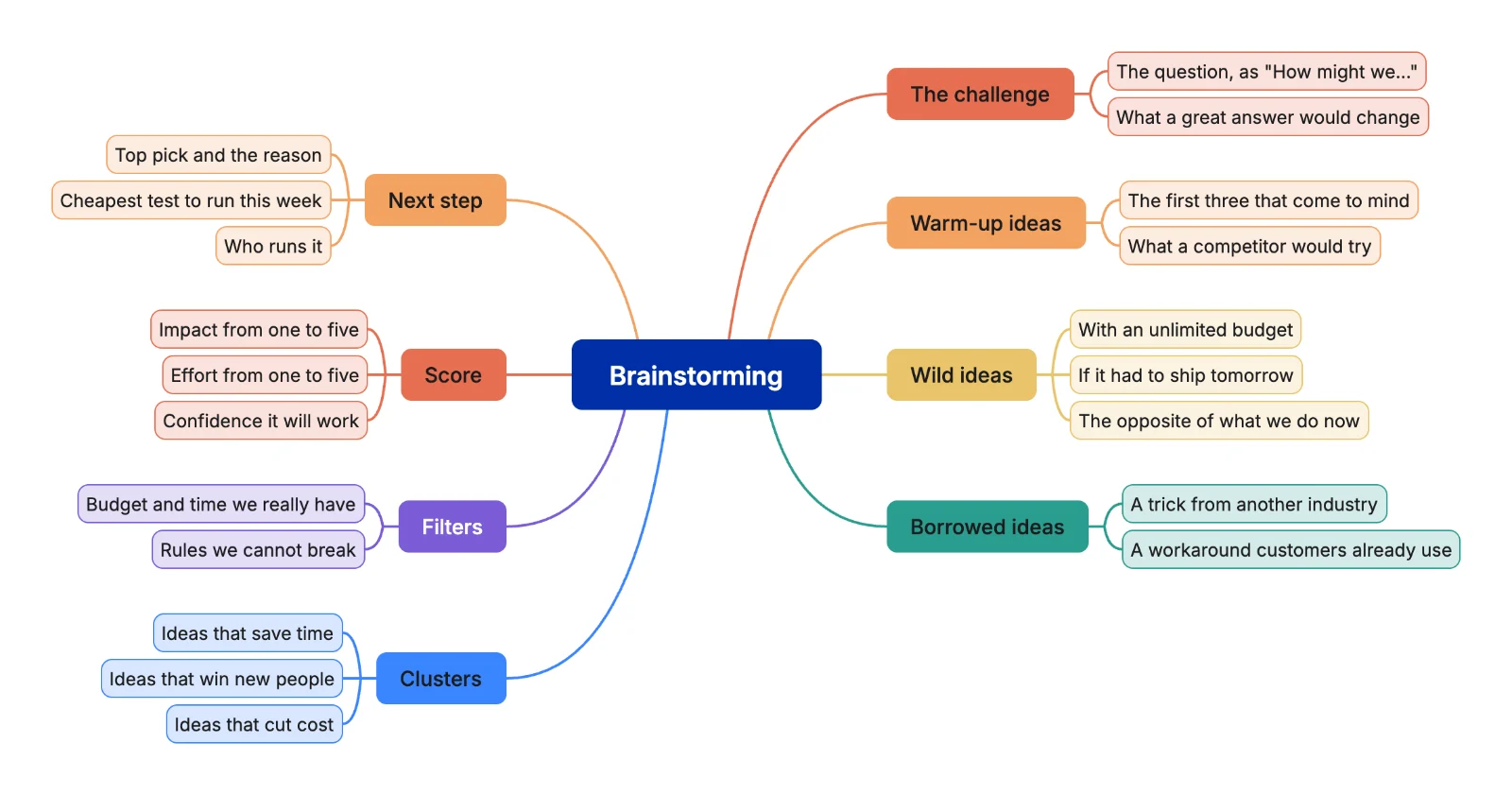 Brainstorming mind map template
A brainstorming mind map with warm-up, wild and borrowed ideas, clusters, filters, scores and a next step, to find and sort ideas alone or in a group.
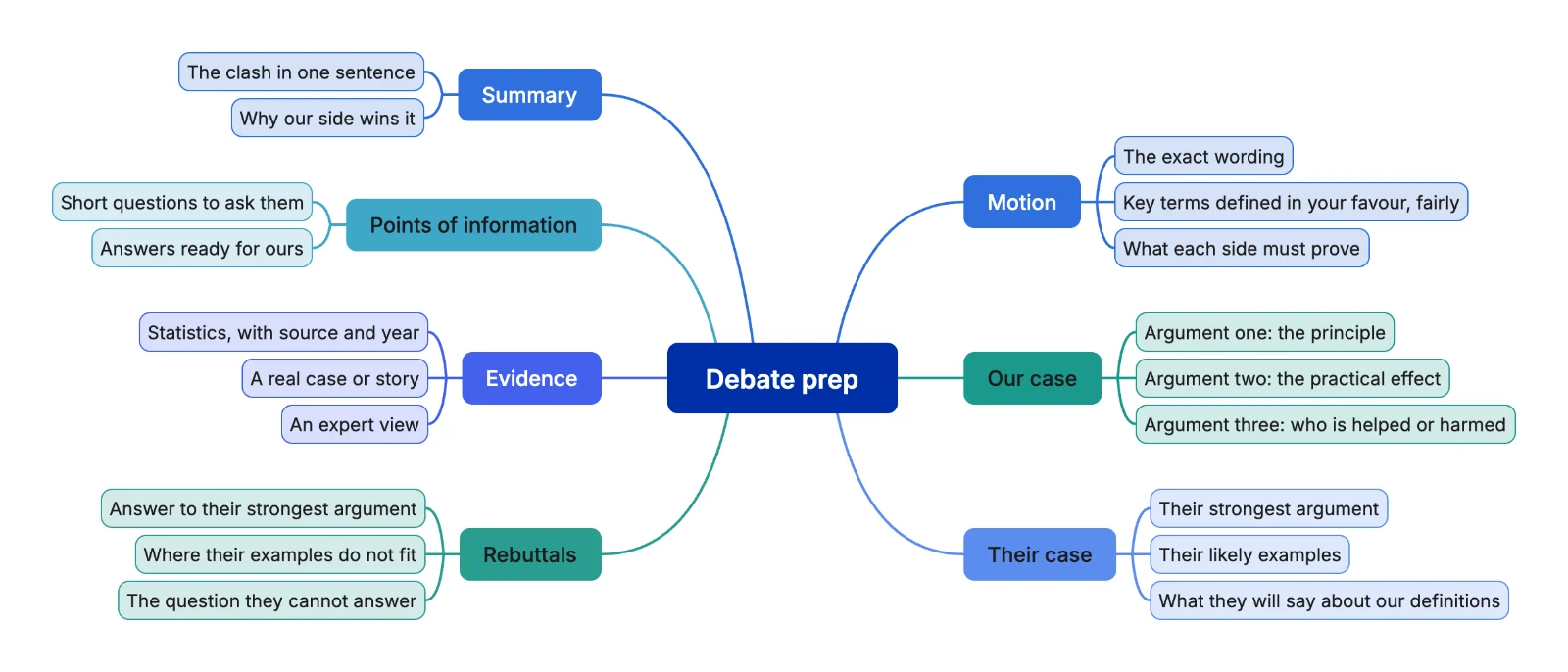 Debate preparation mind map template
A debate prep mind map for one motion: definitions, your case, the other side's best arguments, rebuttals, evidence, and points of information to ask.
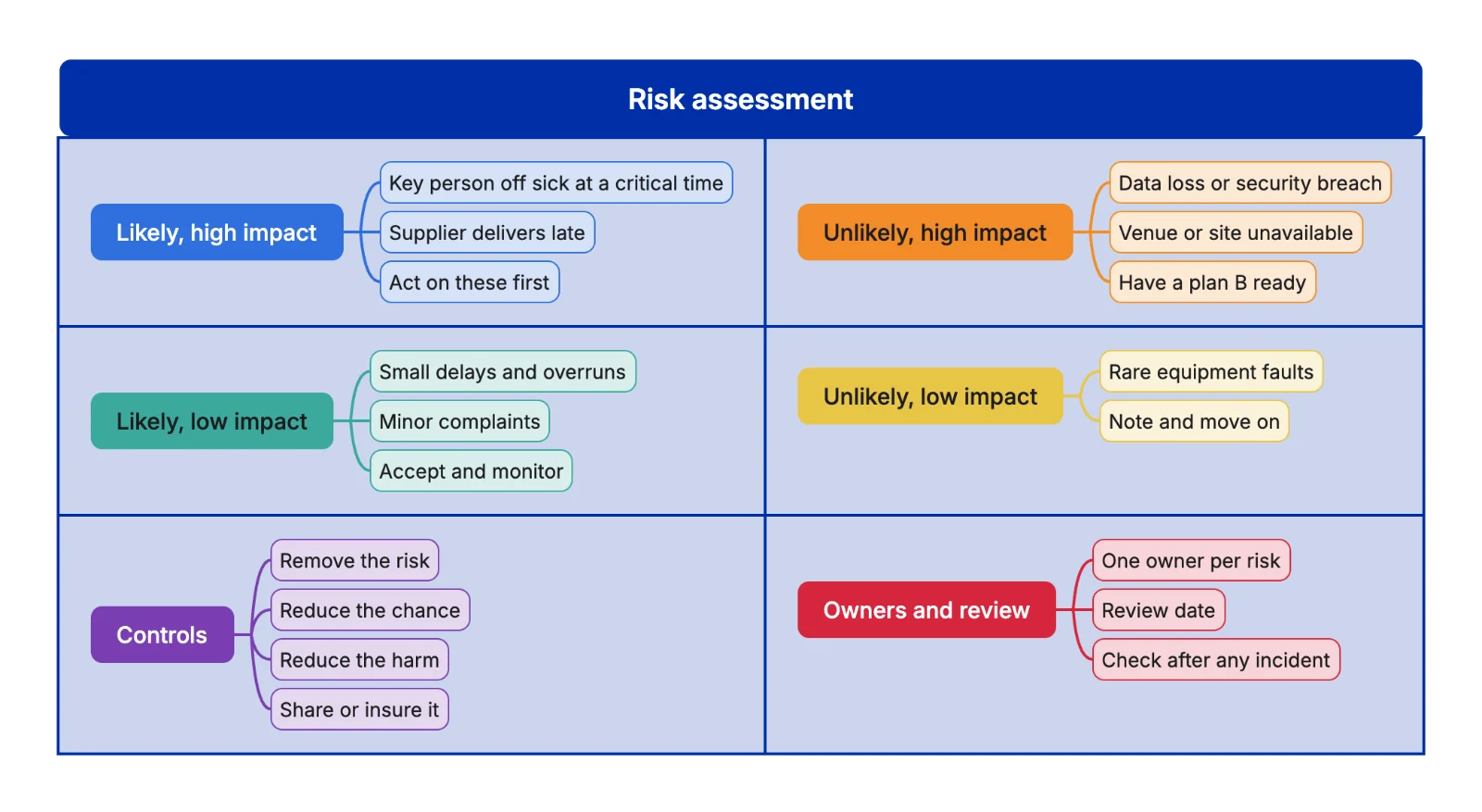 Risk assessment mind map template
A risk assessment mind map in a likelihood and impact grid, with each risk's controls, owner and review date, for a project, event, workplace or trip.
Why a map helps with teaching
A lesson plan is a list, but a lesson is not. The starter links to the practice task, which links to the question you will ask at the end. A map keeps those links visible, so you can see whether the plan hangs together.
It also works on both sides of the desk. The map you plan from can become the map students revise from.
Where to start
For one lesson, open the lesson plan template and work from the objective down. For a unit, open the weekly plan template, rename the centre to the unit, and give each week a branch. Fill the lessons in from the unit overview, then export an outline with the mind map to Markdown tool to paste into your planner.
Free tools for teachers
- Mind map maker: Start a blank map and build it in your browser.
- Mind map to Markdown: Turn a .xmind or OPML map into a Markdown outline.
- Markdown to mind map: Paste Markdown and see it as a mind map.
On iPhone and iPad
MindmapPal for iPhone and iPad lets you write a lesson plan with Apple Pencil and Scribble on iPad, switch the same map to an outline for the handout, and export Markdown or OPML. Maps stay in your own iCloud.
Coming soon to the App Store