Spider diagram vs mind map: what is the difference?
A spider diagram is a diagram with a topic in the middle and related ideas on lines around it, like the legs of a spider, and is closely related to a mind map.
Spider diagram vs mind map
The two terms overlap a lot. People often use them for the same thing. When they are told apart, a spider diagram is the simpler form: a topic, a ring of ideas and a few notes, usually on paper. A mind map goes deeper, with several levels of branches, and often uses colour, images and folding.
What to watch for
“Spider chart” or “spider plot” can also mean a radar chart, which compares scores on several axes. That is a different thing. This page is about the brainstorming diagram.
Where it fits
Use a spider diagram for a quick sketch of ideas. When it gets crowded, turn it into a map by grouping legs under main branches. A concept map differs because its links have labels.
In MindmapPal
You can build either in the mind map maker; it makes a mind map with as many levels as you need.
Example
A pupil plans a story by writing "Pirate story" in a circle and drawing legs to Characters, Setting, Problem and Ending, each with a few notes beside it.
Related terms
- Mind map: A mind map is a diagram that puts one idea in the centre and arranges related ideas around it as branches, with the details of each branch nested under it.
- Radial thinking: Radial thinking is the habit of starting from one idea and branching out to every related idea around it, rather than following a single line of reasoning.
- Concept map: A concept map is a diagram of concepts joined by labelled links that read as statements, such as "plants make glucose", and it can be a network with no single centre.
- Brainstorming: Brainstorming is a technique for producing a large number of ideas on a topic, alone or in a group, before any of them is judged or chosen.
See it in a template
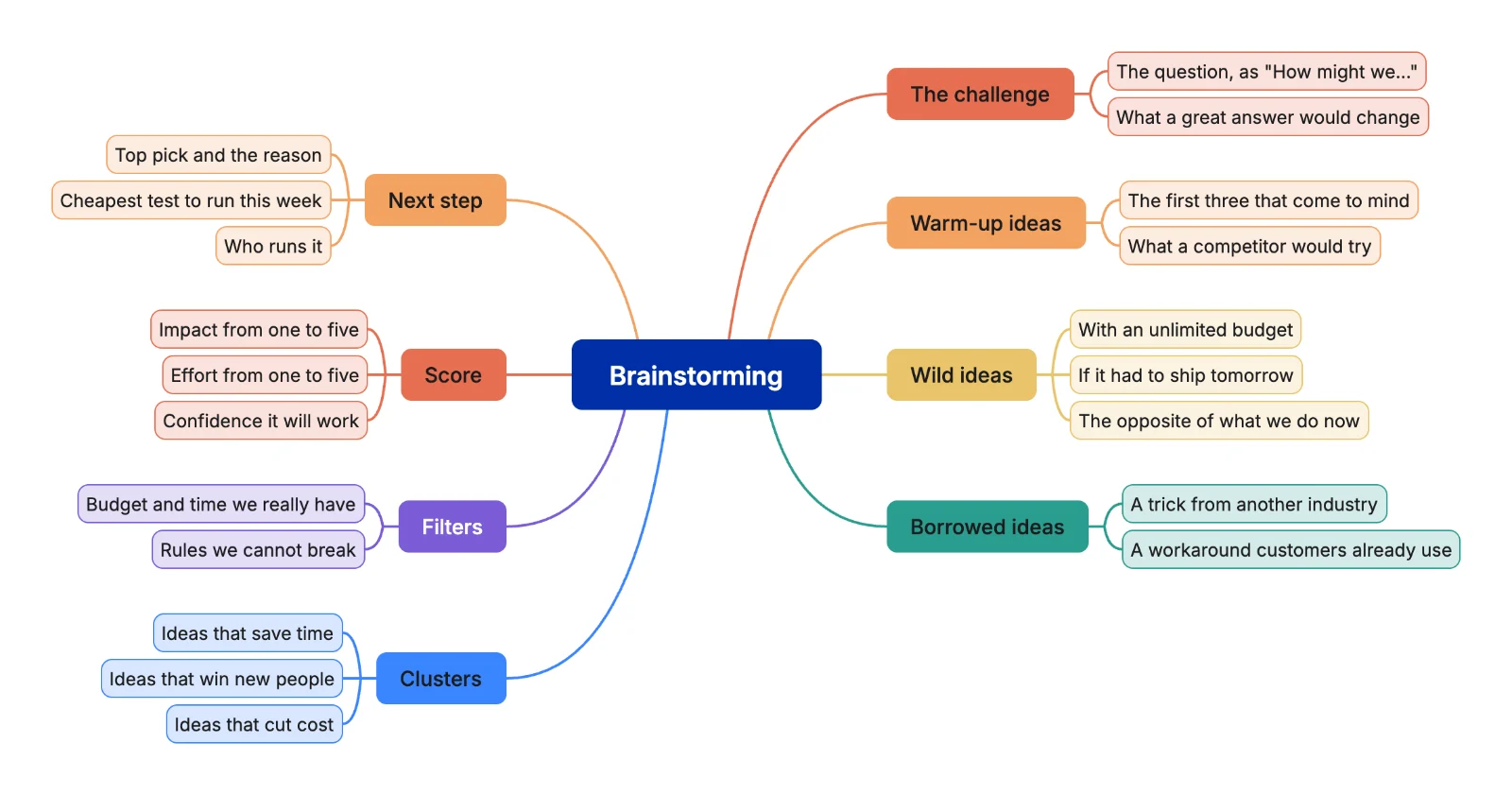 Brainstorming mind map template