Mind maps for researchers
How researchers use mind maps to map the literature, structure a paper, plan a study and sort findings, with templates for each stage.
Who this is for
Academic and industry researchers who read widely, design studies, analyse results and write them up. The material is dense and cross-referenced, and the argument has to be built from many sources.
What a mind map does for researchers
Map the literature
Group papers by theme or method, with authors, findings and gaps under each, so the space your work fills is visible.
Structure a paper before drafting
Branch abstract, methods, results and discussion, and place each finding where its argument needs it.
Design a study
Lay out question, hypotheses, variables, sample and analysis plan, then check each hypothesis has a test.
Organise findings from interviews or notes
Cluster observations into themes as you code them, and keep the quotes under the theme they support.
Templates to start from
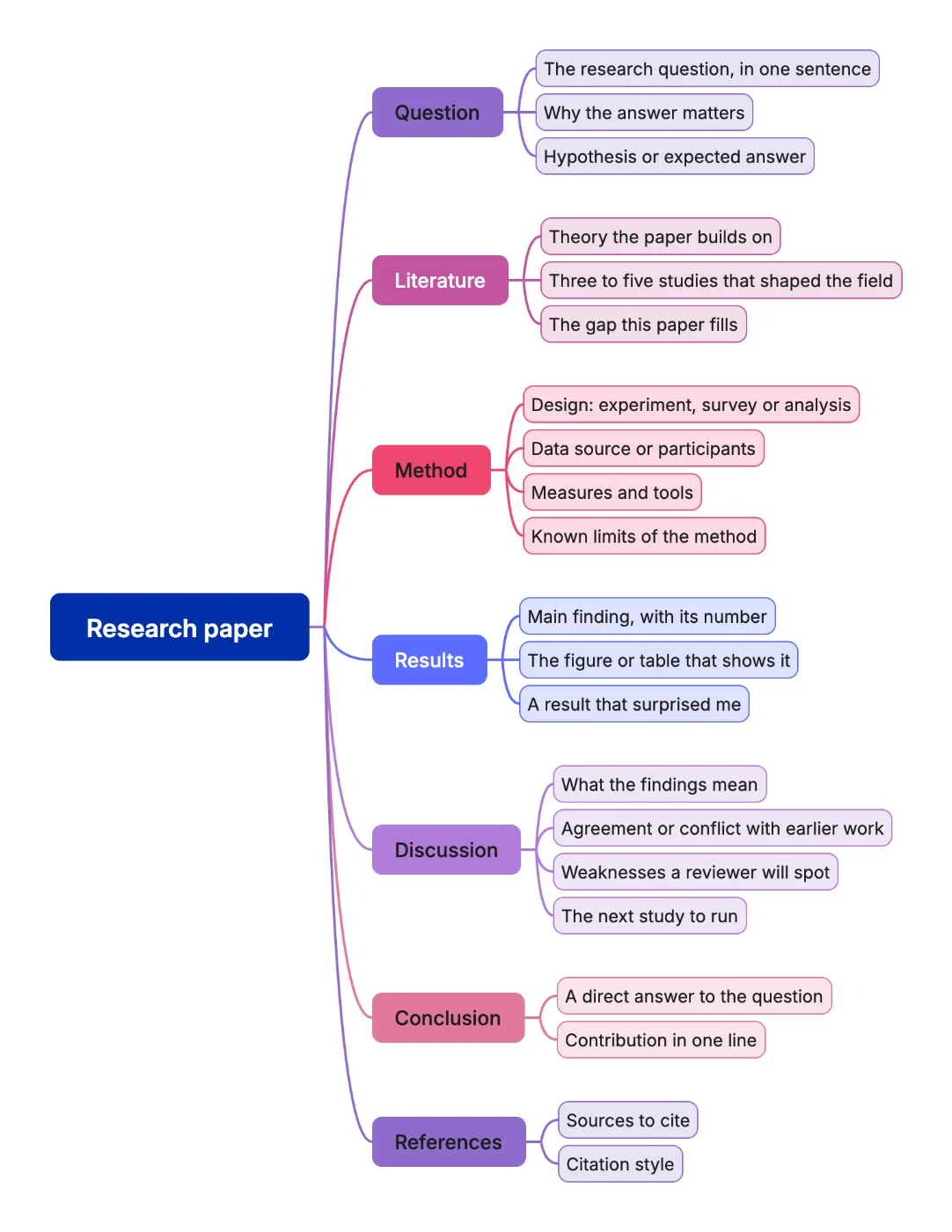 Research paper outline mind map template
A research paper outline mind map with question, literature review, method, results, discussion and references, to organise a paper before writing.
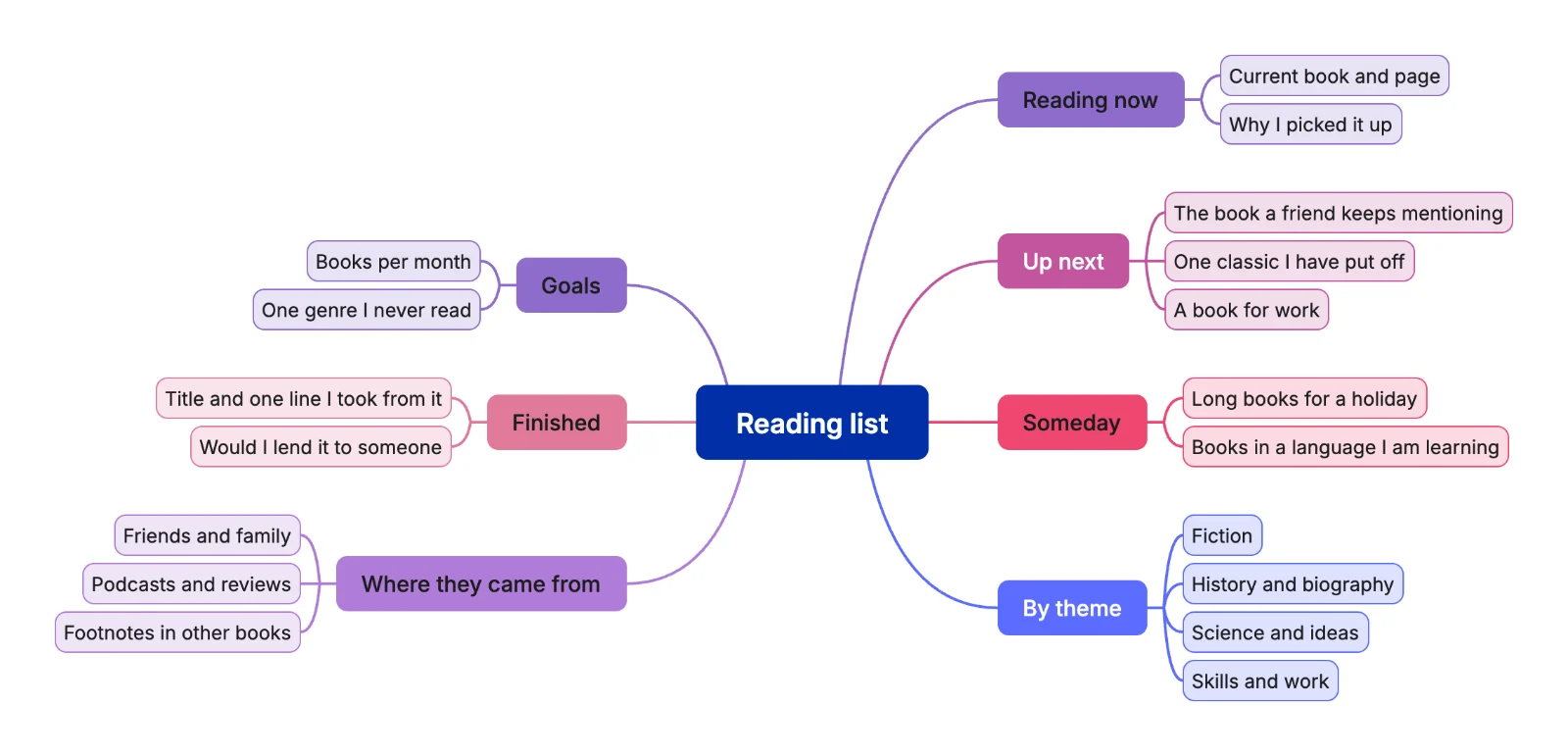 Reading list mind map template
A reading list mind map that sorts books into reading now, up next, someday and finished, with why each is on the list and where the recommendation came from.
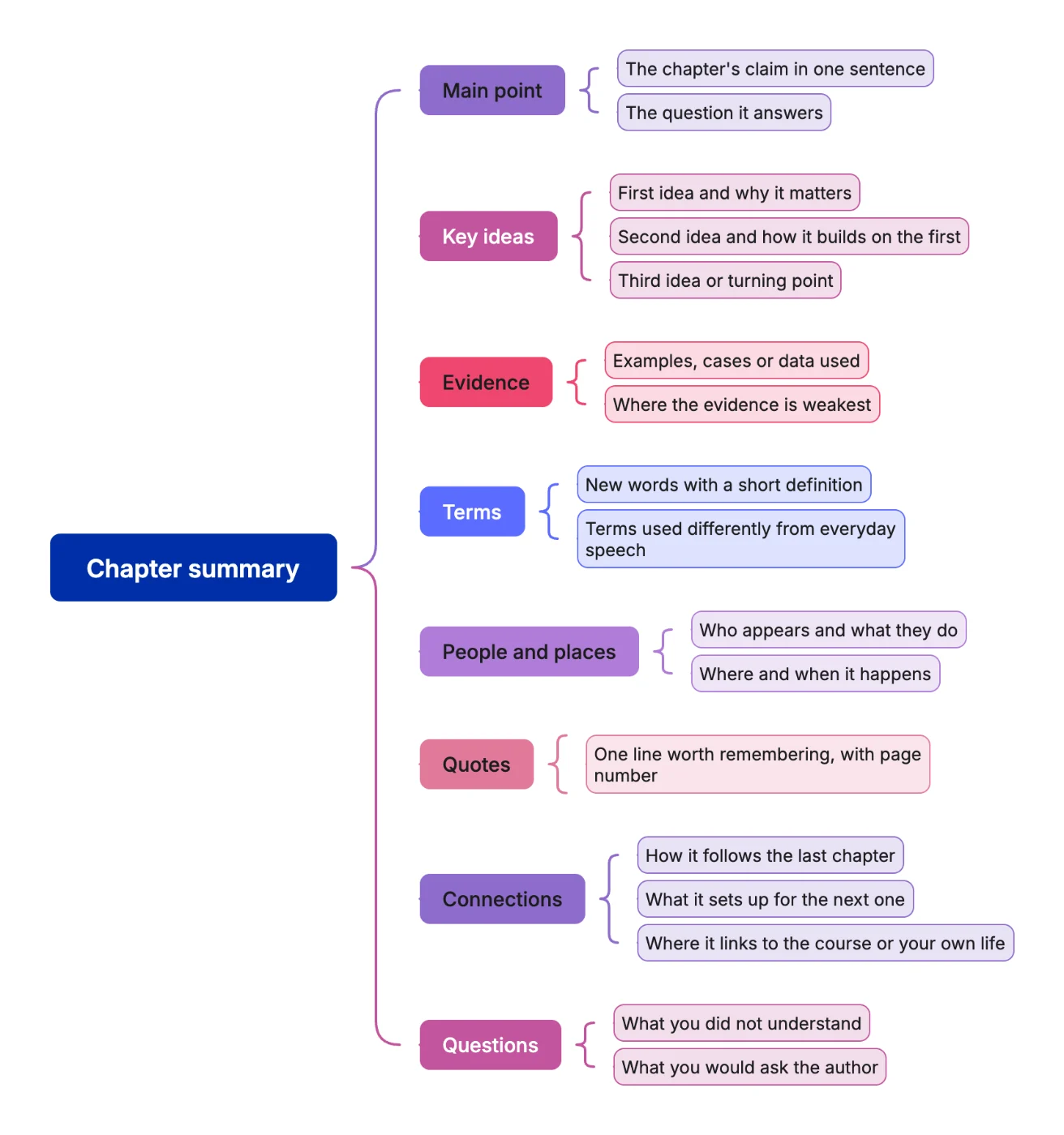 Chapter summary mind map template
A chapter summary mind map with the main point, key ideas, evidence, terms, people, quotes and links to other chapters, to recall one chapter at a glance.
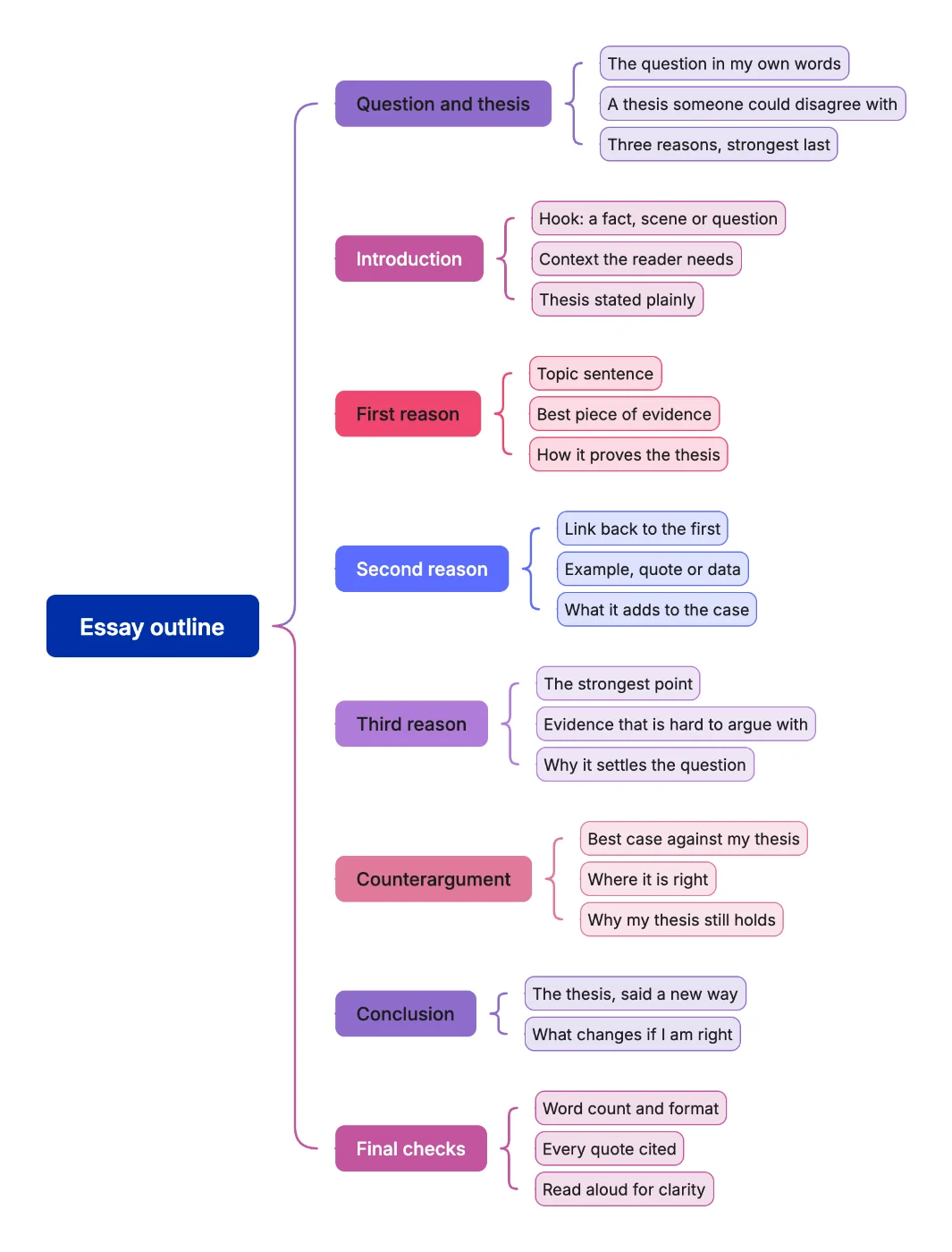 Essay outline mind map template
An essay outline mind map with thesis, introduction, three reasons, counterargument and conclusion, ready to fill in before you start writing.
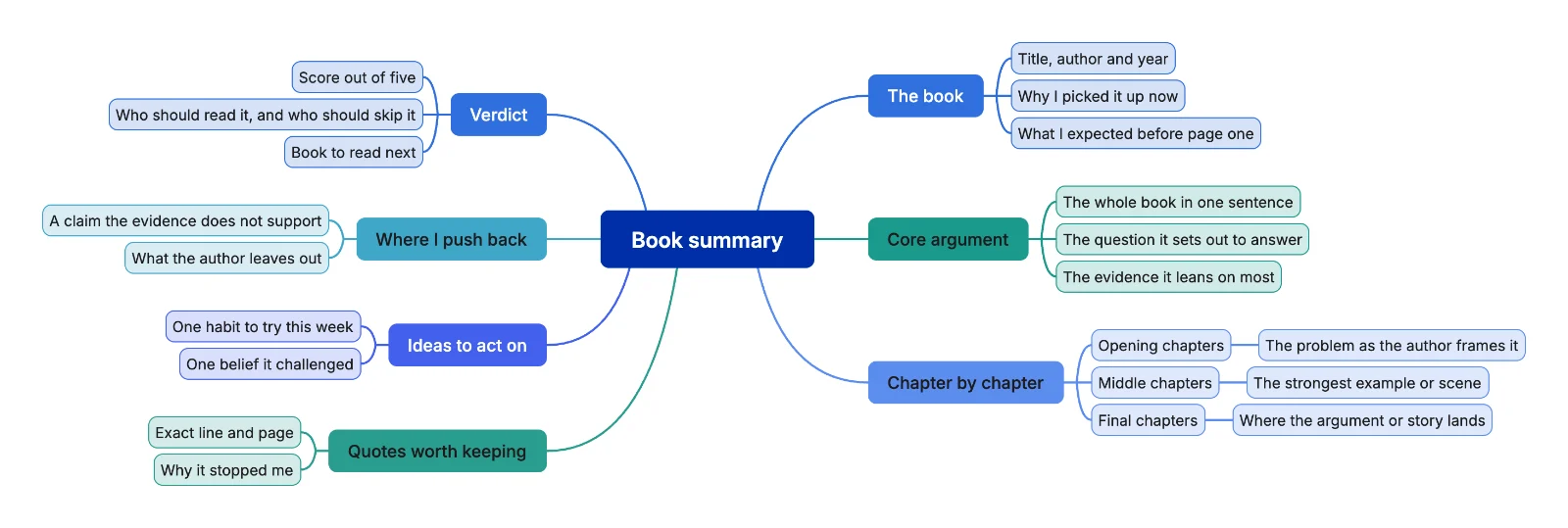 Book summary mind map template
A book summary mind map with the core argument, chapter notes, quotes, ideas to act on, your objections and a verdict, so you can recall a book in one page.
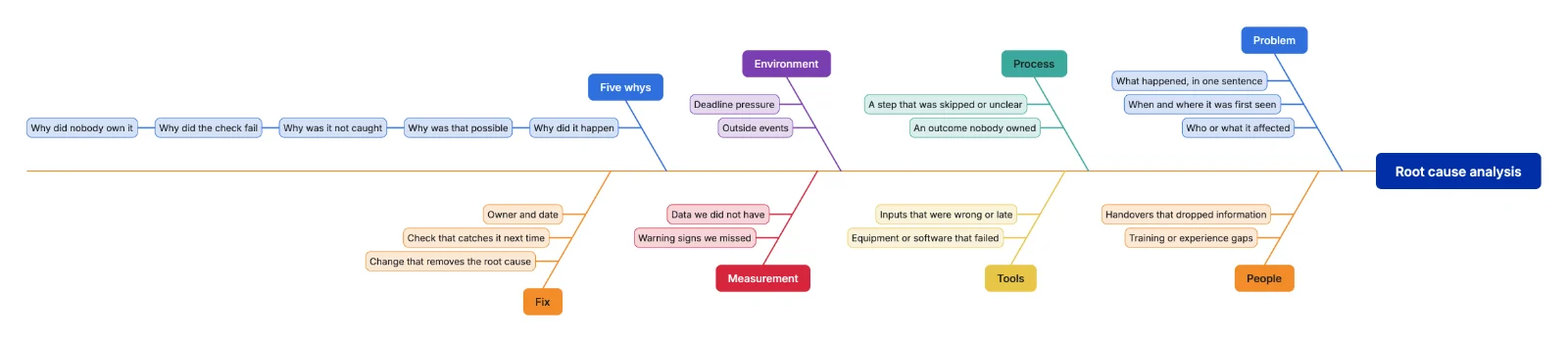 Root cause analysis mind map template
A root cause analysis mind map using five whys and fishbone categories, to trace a problem back to its cause and agree corrective actions.
Why a map helps with research
A literature review is a map in disguise: themes, positions and the disagreements between them. Drawing it early shows what you have read in depth and what you have only skimmed.
Where to start
Open the research paper template, rename the centre to your question and add one branch per theme as you read. Export OPML if your reference or writing tools accept outlines.
Free tools for researchers
- Mind map maker: Start a blank map and build it in your browser.
- Markdown to mind map: Paste Markdown and see it as a mind map.
- Mind map to Markdown: Turn a .xmind or OPML map into a Markdown outline.
On iPhone and iPad
MindmapPal for iPhone and iPad takes notes and tasks inside the map, so a reading note sits on its branch. Export OPML or Markdown to move a literature map into your own writing tools.
Coming soon to the App Store